|
I must be careful to not let study overtake actual practice. The experience of practice is the true path of yoga. Study can act as a guide and a supplement, but at no point should it replace practice.
“The vedas say that true knowledge can only reveal itself to you you cannot reach that state through just reading and studying” -From Yoga Makaranda by Krishnamacharya
0 Comments
When I am struggling with a posture, it is almost inevitably because I am doing it incorrectly or trying to push it deeper than I am prepared to do. It can feel like I am actually "fighting" the posture, pushing my body and mind to do something they don't want to do. But every single yoga posture is an effortless body position when executed correctly.
Now, when I find myself fighting a posture, I go back to the beginning. I examine the purpose of the posture as a whole and the function of each individual body part. Then, I approach it like a beginner and build it piece by piece. I have written about this before regarding Cobra Pose and more recently Crow Pose. The most important part of building a posture is the pursuit of effortlessness. Sure, muscles will work and get tired, and we will come to the edge of our flexibility. But it should always be done with a clear, quiet mind and a sense of ease. When I begin re-building a posture, it looks awkward and very shallow for weeks or even months. But before too long the postures open up deeper than ever before, but this time they are free and easy, without the struggle. So if you are ever "fighting" a posture, go back to the beginning. Start over, like it's your first time. Do each part right, do it with simplicity and peace. Soon, the whole posture will bloom. For the past year I have practiced mainly Tony's "Master's Core System," (MCS) a series of 40 postures that builds on Bikram's 26. The MCS includes more backbending, twisting, asymmetry, and a lot more restorative stretching positions than the 26. I also practice lots of other postures from the Complete Ghosh Series (84 postures) and other traditions. This miscellaneous practice helps me understand my body and improve it, and it helps me understand the focus and power of the body's energy.
Recently I find myself craving a more consistent practice of the advanced postures. I am not yet ready for the Complete Series. There is plenty in there that is far beyond my reach (for now). I need a practice that bridges the gap between MCS and the Complete Series, something that begins to incorporate the advanced movements and positions, preparing my body and mind for the pinnacle postures. It is easy enough to pick the postures that I want to work on. Most yogis I know who practice at home develop their own approach. I will pick the postures that are nearly accessible but still challenging. With practice I will improve. The significant thing that I am slowly realizing is that I need a consistent, repeated series of postures. Just like practicing the same 26 every day in Bikram's class, or Ashtangis who have set series that they don't deviate from. It will serve me better than choosing on a daily basis what I will tackle. So I need to develop a practicable series that will be useful to me for the next year or so. I am becoming more patient. The great postures like Scorpion and Full Wheel and Mountain will be there for me when I am ready. But instead of practicing them now, I must be patient and let my body and mind progress. I must have discipline and faith. How do we find peace
When we are surrounded by violence? How do we find humility When we are surrounded by pride? How do we find silence When the air is filled with pompous voices? How do we find moderation When we are surrounded by excess and gluttony? How do we find happiness When we are encouraged toward dissatisfaction? Are these things within us? Do we find them by turning inward? Will we learn to resist? How can we become pure? How many times have you been instructed to "make space"? Sometimes it is "make space in your joints," sometimes it is "make space in your breath," and sometimes it is mental - "create space in you mind." To be honest, I have never understood or associated with these cues. I find them abstract at best, confusing and meaningless at worst.
But lately I have been finding space, particularly in my mind. Through regular Pranayama (Breath) practice, my mind is gradually becoming still. My thoughts become fuzzy and distant instead of the usual zippy urgency of the rest of my day. I have also been practicing Surrender to the Divine (Ishvarapranidhana), in which I release all of my accomplishments and failures. I consciously choose not to carry them around as defining elements of my self - I am not defined by my successes or failures. I am only who I am. (But what does that mean? I'll keep you posted!) When releasing my accomplishments and failures, I also release the pride and shame associated with them. So I find myself carrying around less pride and less shame than I have in the past. Where I used to be filled with urges and compulsions driven by my shame and pride, now I feel growing stillness and calm. There is a vacuum in my mind and emotions where there used to be driving forces. This, I have come to understand, is "space." I have made space. The most significant part of finding the space is resisting the habit and the urge to fill it. My mind is in the habit of having thoughts. Whenever I am at rest, a thought appears: think about tomorrow, hatch a new plan, analyze the day. Now that I find myself with "space" in my thoughts and desires, I don't know what to do with it. Do I fill it with new thoughts? Or do I let it be empty? Will it fill itself with something else? I have read that this is where God comes in - that we make the space and God fills it. It is a bit abstract for me, but certainly conceivable. At this point I am trying to be patient and sticking with my practice. I have faith that this "space" will reveal something new and important and, for now, that is enough. It saddens me every time I see a yogi promoting unhealthy habits and, even worse, encouraging pride in them. I have heard yogis promote drinking stimulants (like caffeine) and alcohol, eating unhealthy foods and cursing.
We are all drawn to certain destructive habits - eating sweets, drinking coffee, complaining about work and family - but we should avoid them as much as possible. All of these things create new obstacles in our bodies and minds, or they reinforce old obstacles. Then, in our yoga practice, we strive to remove these obstacles to encourage our spiritual growth. So every cookie we eat, every cup of coffee, every mean word and thought has to be undone in order for us to progress. (To be fair, I drink my share of coffee and have been known to eat lots of sweets.) On the flip side of the coin, it is easy to let our pursuit of improvement create frustration, shame and insecurity within us. In an effort to improve we recognize our weaknesses, and we begin to obsess over them. Without care, what starts as a profound and healthy desire to better ourselves can grow into self-loathing. We are not perfect. I'm not perfect and neither are you. I have histories, scars, memories, habits and desires that hinder me as much as they help me. I try to locate, acknowledge and accept my barriers in order to release them and move past them. Most habits distract the mind, especially ones that stimulate the senses. This can include food, music, television, even conversation and sex. We must take care that we do not engage in activities to draw the mind outward toward the senses. This is the simple essence of the 5th limb of Patanjali's yoga - Pratyahara or the Withdrawal of the Senses. When I see yoga paired with wine or chocolate tastings, I am saddened for the contradiction: yoga practice to center the mind and sensory stimulation to draw it outward. I feel the same when I hear yogis encouraging drinking or poor nutrition for the sake of indulging the senses. I know that it is culturally attractive to be a wine connoisseur or to know where the best milkshake in town can be found, but these things hinder us on our progress toward a clear mind and a healthy life. With the Regional Competition behind me and the National Competition about two months away, I consider the pros and cons of competing at yoga or asana or whatever it is that we are demonstrating when we get up on stage in a competition.
Yoga itself is not about competition; it's not about being the best. Yoga is not even about perfection, whatever that may mean. It is also not really about the postures, the asana. In those ways, yoga competition goes against the essence of the practice: spiritual awakening and connection. What is the competition about, if it's not about yoga? Confidence, courage, self-improvement, refinement, attention to detail, to name a few. BEING OBJECTIVE Preparing for competition has made me assess my practice objectively. What am I capable of at this moment in time? What can I do well and consistently? In addition, what can I improve sufficiently in a relatively short amount of time? This has changed the focus of my practice. Usually I play the long game, practicing what feels right for the day, striving for slow, balanced progress. With the pressure of competition, I have also started "pushing" a small handful of postures, deepening and refining them more than usual. This focus has improved my postures and honed my attention to detail in my practice. NERVES The most surprising element of competing thus far has been the sheer terror of getting up in front of judges and an audience and demonstrating my practice. What if I fall? What will they think? Am I deep enough? Am I still enough? Some postures can be challenging enough even when no one is watching. Add a room full of strangers and judges critiquing your every breath... you get the picture. So, to put it lightly, I was nervous when I got up on stage. I knew I would be. The challenge for me was not to remove or even diminish the nerves. The challenge was to get on stage and do my best anyway. Stand, fall, tight, sweaty, terrified - no matter what I was going to give it a shot. I don't deny that there are confusing and negative aspects to yoga competition. I try to focus on the positives and the benefits and not get wrapped up in the weirdness and negativity. I try to avoid letting it turn into a ego contest or an "I win, you lose" situation. I stay focused on the improvement to myself and my practice, and the tackling of my fears. My interest has been renewed in studying the ancient texts of yoga. In addition to the Yoga Sutras there are texts like the Hatha Yoga Pradipika, the Jogapradipika, the Bhagavad Gita, expositions by various masters like Vashista, Matsyendra and Gheranda. Plus thousands or tens of thousands of other shastras written anonymously.
I ask myself, "do I know more than these yogis?" If I disagree with something they have written, do I have the authority to disregard it and do my own thing? Why would I take their advice in some aspects but not in others? Like many other modern yogis, I have instincts and opinions about what is "right" in yoga and what is "best." Not to mention the powerful pull of capitalism that seems destined to drag yoga into the world of physical fitness. Who am I to say what yoga is or is not? Especially when there is documentation from yogis far greater than me. At this point, I feel the need to be humble. Practice, be focused and studious. Read what these yogis wrote that has lasted thousands of years. Develop my own relationship with this powerful force we call yoga. I have been deepening my study and practice of Pranayama, the often misunderstood and ignored practice of 'life-force extension'. Many practitioners simplify this to mean 'breathing exercises,' but Pranayama can't be reduced to breathing exercises any more than Asana (Postures) can be reduced to 'stretching.' Like all of yoga, intention, focus and dedication are vital to the practice of Pranayama.
In the Yoga Sutras, Patanjali describes Pranayama as the lengthening and smoothing of the inhale and exhale, but he is almost alone in that description. Most of the other ancient texts define Pranayama as primarily or entirely Kumbhaka, breath retention. To them, Pranayama is synonymous with holding the breath. It is within these periods of held breath that the life force of the body, the prana, is controlled, extended, slowed and eventually even halted altogether. This stillness, when even the most basic functions of the body are ceased, is where the consciousness reveals its true nature - the formless, the absolute. Pranayama is described by many of the texts as the most important element of a yogic practice. It is through this control that higher stages of self-integration are realized and that karmic demerit, the junk we carry with us from our current and previous lives, is removed. Happy New Year! I want to start this year with focus and simplicity. What better way than to ponder the wisdom of the Brihadaranyaka Upanishad? It spells out the value of right action, a moral code that can be found at the root of almost all spiritual traditions.
"As a person acts, so he becomes in life. Those who do good become good; those who do harm become bad. Good deeds make one pure; bad deeds make one impure. You are what your deep, driving desire is. As your desire is, so is your will. As your will is, so is your deed. As your deed is, so is your destiny." From the Brihadaranyaka Upanishad. |
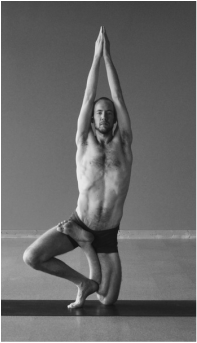
This journal honors my ongoing experience with the practice, study and teaching of yoga.
My FavoritesPopular Posts1) Sridaiva Yoga: Good Intention But Imbalanced
2) Understanding Chair Posture 2) Why I Don't Use Sanskrit or Say Namaste 3) The Meaningless Drudgery of Physical Yoga 5) Beyond Bikram: Why This Is a Great Time For Ghosh Yoga Categories
All
Archives
November 2017
|

 RSS Feed